Imagine a table transformed: from a casual weekday breakfast to an elegant dinner party, the right tableware set is the silent conductor of every meal's atmosphere. More than mere dishes, your chosen plates, bowls, and cups are the foundation of your tablescape, reflecting your personal style and elevating the entire dining experience. Selecting the perfect set, however, can feel overwhelming with endless options in material, design, and function. This guide cuts through the clutter, offering expert insights to navigate the key considerations—from durable everyday stoneware to delicate formal porcelain. We’ll empower you to make an informed choice that blends beauty with practicality, ensuring you have the ideal pieces to create memorable moments, for every occasion life serves up.
A complete tableware set is the foundation of any well-appointed table, transforming a simple meal into a considered experience. It consists of coordinated pieces designed for both function and form, ensuring every course is served with ease and aesthetic harmony. For hospitality businesses, event planners, and discerning retailers, selecting the right set is a critical operational and branding decision. Raylon Enterprise Co., Ltd., a leader in premium tableware manufacturing, provides expertly crafted, durable collections that meet the exacting standards of global clients, from luxury hotels to specialty stores.
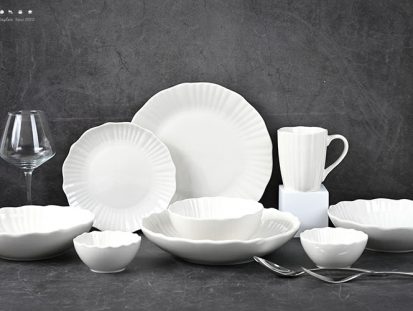
The core of a standard dinnerware set is the five-piece place setting, which typically includes a dinner plate, salad/dessert plate, soup/cereal bowl, teacup, and saucer. This configuration covers the fundamental needs of most dining occasions. For formal service, this expands to include additional specialized items such as bread and butter plates, soup cups with underliners, and demitasse sets.
Beyond dinnerware, a comprehensive tableware ensemble integrates essential serving pieces and flatware. Key serving items are:
Flatware, or cutlery, follows a parallel logic. A basic place setting includes a dinner fork, dinner knife, soup spoon, and teaspoon. Formal settings incorporate salad forks, fish knives, dessert spoons, and butter spreaders. The material—commonly 18/10 stainless steel for its superior corrosion resistance and luster—is as important as the silhouette.
The true mark of a professional-grade set is material integrity and design coherence. Porcelain and bone china are prized for their strength, chip resistance, and elegant translucency. Stoneware offers a robust, more casual aesthetic. Each piece across dinnerware, serveware, and flatware should share a consistent design language—be it a specific rim, glaze, pattern, or handle shape—to create a unified tablescape. This cohesion, underpinned by commercial-grade durability, is what defines the offerings from manufacturers like Raylon Enterprise, ensuring performance withstands the rigors of daily use while elevating the dining presentation.
Material selection is the cornerstone of any tableware collection, directly impacting aesthetics, functionality, durability, and occasion suitability. The choice between porcelain, bone china, stoneware, earthenware, and stainless steel defines the user experience. As a leader in manufacturing excellence, Raylon Enterprise Co., Ltd. specializes in producing premium tableware across these material categories, ensuring quality and design integrity from raw material to finished product.
Porcelain and Bone China represent the pinnacle of formal dining. Fired at extremely high temperatures, porcelain is vitrified, making it non-porous, chip-resistant, and elegant with a pure white finish. Bone china, incorporating bone ash, achieves a remarkable combination of translucency and strength. Both materials are ideal for sophisticated dinners and are typically dishwasher and microwave safe. Their refined appearance commands careful handling.
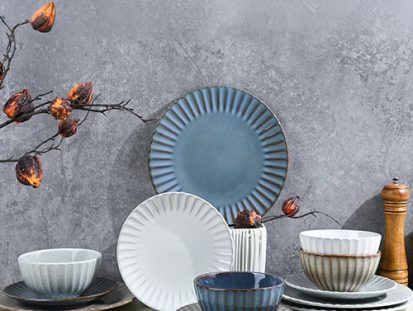
Stoneware and Earthenware offer a more robust, casual aesthetic. Stoneware is dense, fired at high heat, and naturally opaque with excellent chip resistance. Its glaze is integral, making it fully vitrified and suitable for daily use, including ovens. Earthenware, fired at lower temperatures, is more porous and requires a glaze to be waterproof. It often features heavier, rustic designs but is generally less durable and not microwave-safe. These materials excel in creating a relaxed, earthy tablescape for everyday meals and informal gatherings.
Stainless Steel is the undisputed choice for durability and modern utility. Highly resistant to corrosion, staining, and impact, it is perfect for flatware, serving pieces, and contemporary dish sets. High-quality, 18/10 grade (18% chromium, 10% nickel) offers superior luster and resistance to pitting. It is inherently dishwasher safe, maintains temperature well for serving, and provides a sleek, minimalist aesthetic for both casual and formal modern settings.
| Material | Best For | Key Characteristics | Care Notes |
|---|---|---|---|
| Porcelain/Bone China | Formal dining, special occasions | Elegant, strong, non-porous, often translucent (china) | Dishwasher safe; avoid extreme thermal shock |
| Stoneware | Everyday use, casual dining | Durable, chip-resistant, oven-safe | Typically dishwasher and microwave safe |
| Earthenware | Rustic, informal settings | Porous, heavier, rustic aesthetic | Hand-wash recommended; often not microwave safe |
| Stainless Steel (18/10) | Flatware, modern service | Extremely durable, corrosion-resistant, hygienic | Dishwasher safe; can be polished |
The optimal material balances the occasion's formality with practical lifestyle needs. A versatile collection often incorporates multiple materials—fine china for celebrations, sturdy stoneware for daily meals, and resilient stainless steel for utensils.
Selecting tableware that aligns with your dining aesthetic is a fundamental step in creating a cohesive and intentional tablescape. The right set acts as the foundation, harmonizing with your interior design and elevating the dining experience. This process involves analyzing key stylistic elements of both your space and the tableware itself.
Begin by assessing the core design language of your dining area. Is it characterized by clean lines, minimal ornamentation, and a neutral palette? A modern or minimalist aesthetic pairs seamlessly with tableware in solid, muted colors—think matte black, dove grey, or crisp white. Shapes should be simple and geometric; consider square plates or bowls with sharp, unadorned edges. Materials like high-fired porcelain or matte stoneware from manufacturers like Raylon Enterprise Co., Ltd., known for their precision in minimalist ceramic and porcelain production, are ideal.
Conversely, a traditional or classic setting calls for elements of formality and detail. Bone china or fine porcelain with a delicate rim, such as a gold or platinum band, is a timeless choice. Patterns may include subtle damasks, botanical motifs, or classic white-on-white textures. Shapes are typically round or oval with softened edges, contributing to an atmosphere of refined elegance.
For rustic, farmhouse, or organic aesthetics, seek tableware with inherent texture and artisanal character. Hand-thrown stoneware with visible speckles, raw edges, or a reactive glaze finish complements natural materials like wood and linen. Neutral earth tones—terracotta, oatmeal, sage—and organic, asymmetrical shapes enhance this lived-in, welcoming feel.
A bohemian or eclectic style invites more personal expression through mixing and matching. This is an opportunity to combine different patterns, colors, and eras. Start with a foundational set of solid-colored plates, then layer in patterned accent plates, textured napkins, and varied glassware. The key is to maintain a unifying element, such as a consistent color family or material.
Ultimately, your tableware should feel like a natural extension of your space. By prioritizing harmony in form, finish, and color, you create a setting that is both visually grounded and personally resonant.
Proper maintenance and storage are critical for preserving the beauty, functionality, and longevity of your tableware. These practices protect your investment and ensure your pieces are always ready to elevate any dining occasion. Raylon Enterprise Co., Ltd., a leader in high-quality tableware manufacturing, emphasizes that meticulous care is integral to the product lifecycle, complementing the initial selection process.
Daily Care and Cleaning
Always consult the manufacturer's care instructions first. General principles include:
Strategic Storage Solutions
Correct storage prevents chips, scratches, and stress damage.
Handling and Usage Best Practices
Adhering to these disciplined routines ensures your tableware remains in pristine condition, ready to serve as the foundation for memorable gatherings for years to come. Raylon Enterprise Co., Ltd. designs its collections with durability in mind, but consistent, informed care from the user is the ultimate key to preservation.
A formal dinnerware set typically includes dinner plates, salad/dessert plates, soup/cereal bowls, and mugs or teacups with saucers. For a complete service, many sets also incorporate bread and butter plates, a serving platter, a covered vegetable dish, and a sugar bowl with creamer. The number of place settings determines the quantity of each piece, with a standard 5-piece place setting being the most versatile foundation.
Bone china is prized for its translucency, chip resistance, and lightweight strength, making it ideal for formal dining. Porcelain (or fine china) is highly durable, non-porous, and offers a brilliant white base for intricate patterns. Stoneware is thicker, more casual, and extremely durable for everyday use, often being oven, microwave, and dishwasher safe. The choice hinges on your lifestyle: bone china for elegance and frequent formal entertaining, porcelain for a balance of durability and refinement, and stoneware for resilient daily use.
The number refers to the total count of individual items. A 16-piece set is usually a 4-person place setting set (e.g., 4 each of dinner plate, salad plate, bowl, and mug). A 45-piece set is typically a 12-person service set, including core place settings plus essential serving pieces like a platter, vegetable bowl, and sugar/creamer. For building a versatile collection, consider starting with place settings for your typical number of guests and adding open-stock serving pieces as needed.
Handwashing with a mild detergent in warm water is always recommended for fine china, gold, or platinum-banded pieces to preserve decorative elements. Most modern porcelain and stoneware are dishwasher safe, but place them securely to prevent chipping. Avoid extreme thermal shocks (e.g., placing a hot plate in cold water). Use felt or rubber plate stackers for storage to prevent surface scratches. Never use abrasive cleaners on any tableware.
Yes, for specific pieces. Professional-grade items are engineered for extreme durability, heat retention, and stackability. Investing in restaurant-quality coupe plates (rimless), pasta bowls, or bistro mugs can elevate the everyday dining experience with superior functionality. However, for formal occasions, traditional fine china offers an aesthetic and heritage that commercial ware does not. A blended service is often the most practical.
Always purchase tableware from reputable brands that comply with FDA regulations (or equivalent international standards like EU Directive 84/500/EEC). Be particularly cautious with brightly colored glazes on the food-contact surface of imported or artisan pieces. Reputable manufacturers will provide material safety assurances. For maximum safety, especially for daily use, opt for fully vitrified porcelain or stoneware with underglaze decoration, where the design is sealed under a layer of glass-like glaze.
The shape dictates functionality and presentation. Coupe plates (rimless) offer a modern, seamless canvas for food presentation, making them popular in high-end restaurants. Rimmed plates (the most common) provide a structural border for easier handling and are ideal for sauces or dishes with more liquid. Rimmed plates also allow for decorative borders. Choose coupe for a contemporary, chef-style aesthetic and rimmed for traditional, versatile service.
The MOQ for regular styles is 1000 pcs/style; the MOQ for custom styles is 1500 pieces/style. A small trial order can be requested for first-time cooperation (an additional sampling fee will apply).