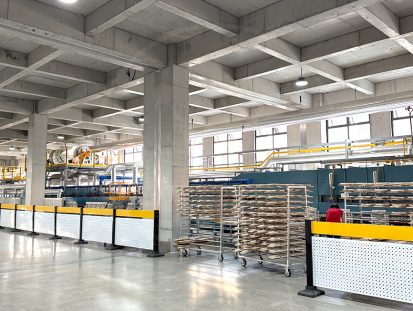
Raylon is pleased to announce the official opening and kiln ignition of its new modern ceramic factory.
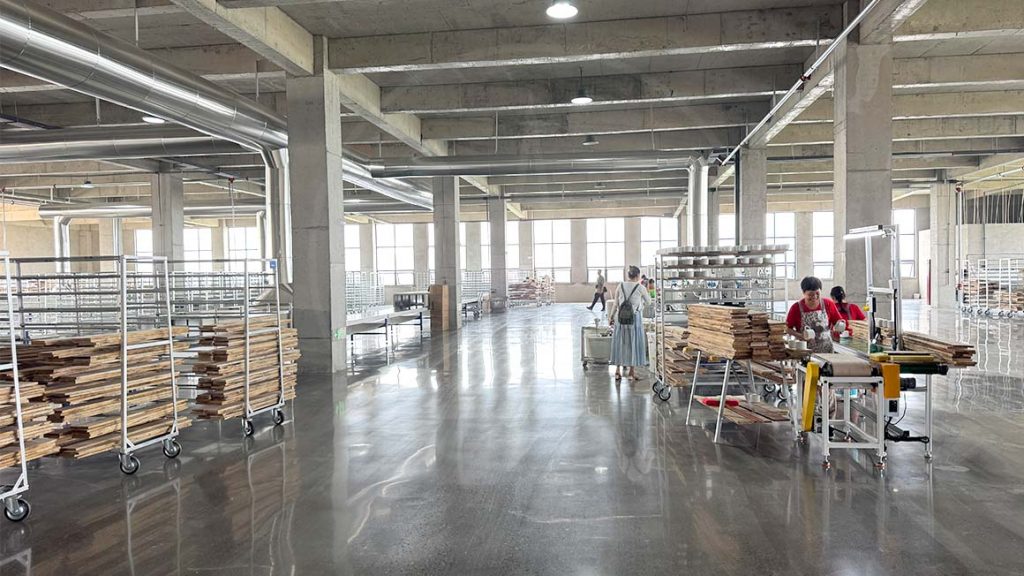
Equipped with advanced production facilities and automated ceramic manufacturing lines, the new factory represents an important step forward in Raylon’s production capacity, manufacturing efficiency and long-term supply capabilities.
The facility includes seven 40-ton ball mills, 11 automatic trimming units and two 92-meter kilns. Together, these systems provide strong production support for ceramic dinnerware, including plates, bowls, mugs and complete tableware collections.
For global importers, wholesalers, retailers, hospitality suppliers and private-label brands, the opening of this modern ceramic factory means more than an expansion in production space. It represents a more efficient, consistent and responsive manufacturing system designed to support international ceramic sourcing projects.
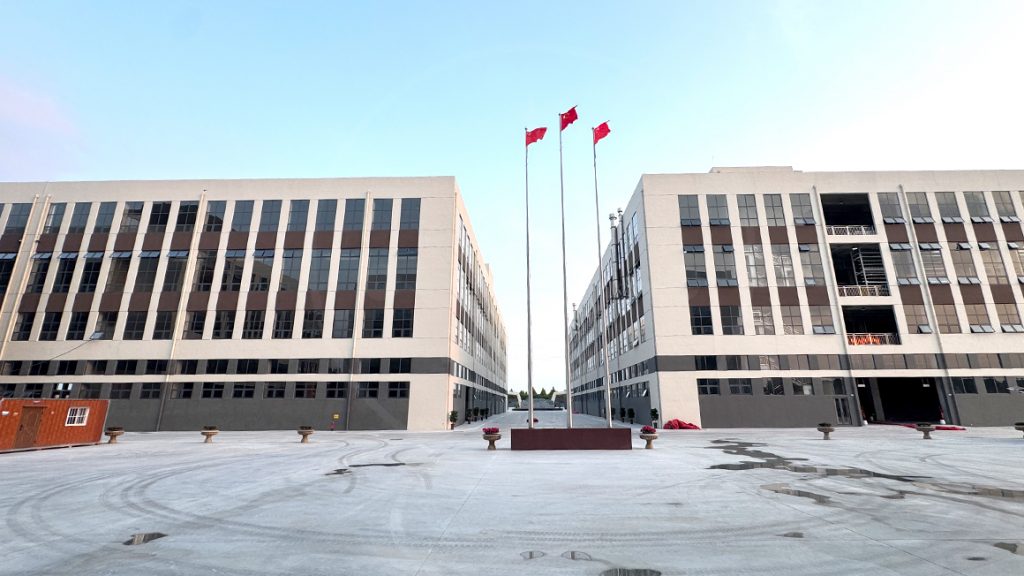
The official kiln ignition marks the beginning of a new stage in Raylon’s ceramic manufacturing development.
At the opening ceremony, Raylon’s General Manager addressed attendees as the factory officially entered operation. The event brought together Raylon representatives, factory management and production teams to celebrate the launch of the new facility.
For Raylon, the new ceramic factory is not simply an additional production location. It strengthens the connection between product development, manufacturing, quality inspection and export services.
Since 2002, Raylon has focused on supplying tableware, glassware and kitchenware to international buyers. The new facility further strengthens Raylon’s ability to combine trading expertise with direct manufacturing resources.
This integrated approach allows Raylon to better understand international market requirements while maintaining closer control over production progress, product quality and delivery schedules.
Modern ceramic manufacturing requires more than production capacity alone. It also requires reliable equipment, coordinated production stages and consistent process management.
The new factory has been designed around a modern production flow, from ceramic raw material preparation and body finishing to kiln firing and final inspection.
Automation plays an important role throughout the production process. It helps reduce variations caused by repetitive manual operations, improves production efficiency and supports more consistent results across large order quantities.
The facility’s spacious workshops, organized production lines and modern equipment also provide a stronger foundation for the development of ceramic products for supermarkets, retailers, restaurants, hotels, distributors and private-label brands.
Visitors can learn more about Raylon’s existing factory facilities and production equipment.
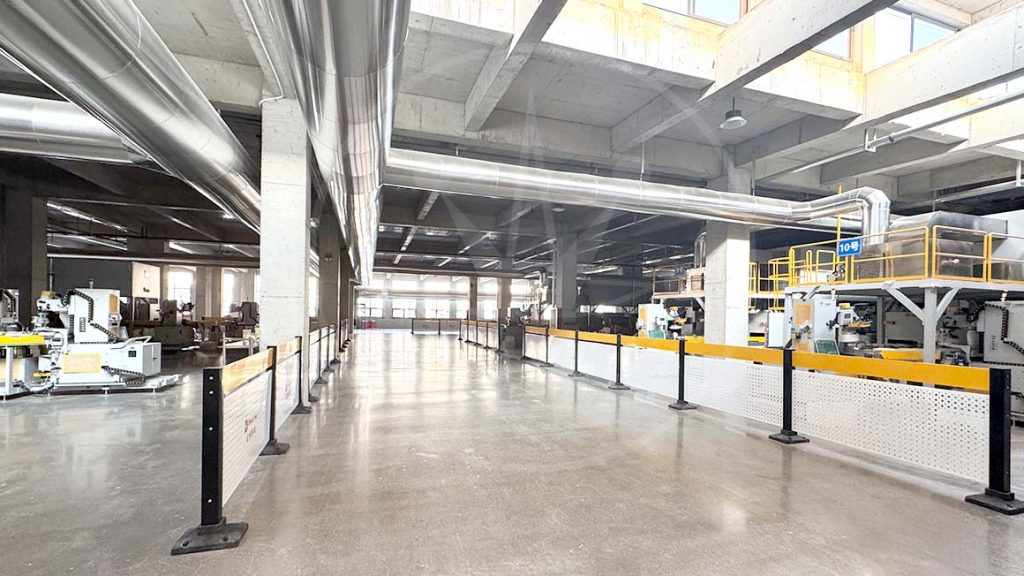
The production equipment is one of the most important features of the new facility.
Rather than describing the factory only as “modern” or “high-tech,” its manufacturing capabilities can be seen in the scale and organization of its equipment.
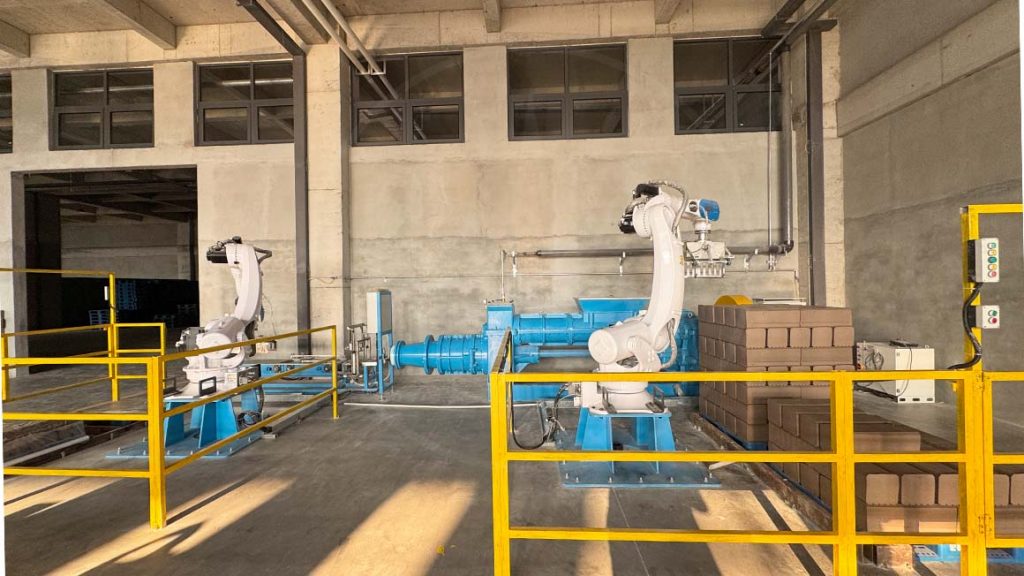
The factory is equipped with seven 40-ton ball mills for ceramic raw material preparation.
Ball milling is an important early stage in the ceramic manufacturing process. Ceramic raw materials must be thoroughly ground and mixed before they can move into forming and subsequent production stages.
The large-capacity ball mills support efficient raw material processing and help maintain greater consistency between different production batches.
Stable raw material preparation creates a stronger foundation for:
For international buyers placing repeat orders, consistency at the raw material stage is particularly important. Differences in material preparation can affect product appearance, shape, glaze performance and final quality.
By using seven 40-ton ball mills, the factory is better positioned to support continuous ceramic production and different product development requirements.
After ceramic items are formed, the bodies normally require trimming and surface finishing before glazing and firing.
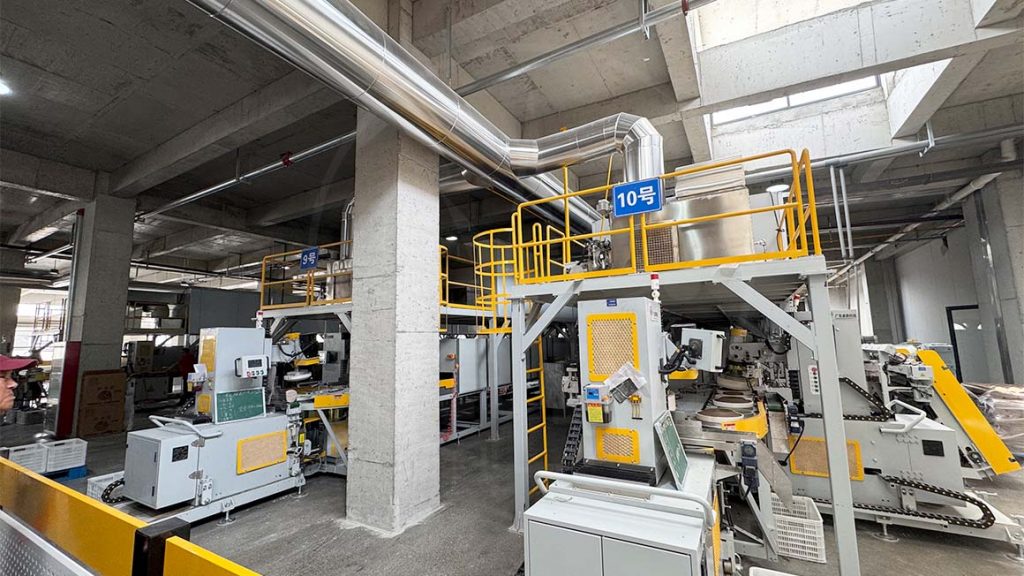
The new ceramic factory is equipped with 11 automatic trimming units integrated into the production system.
These machines help refine the edges, bases and surfaces of ceramic bodies. Compared with fully manual trimming, automated equipment can provide greater consistency when processing large quantities of plates, bowls and other standardized tableware shapes.
The automatic trimming process helps support:
This is especially valuable for ceramic dinnerware sets. Plates, bowls and mugs within the same collection need to maintain coordinated proportions, dimensions and visual consistency.
Automated trimming does not replace experienced production management or quality inspection. However, it provides a more controlled production foundation and reduces unnecessary differences during repetitive manufacturing processes.
Firing is one of the most critical stages in ceramic manufacturing.
The new factory features two 92-meter kilns designed to support continuous ceramic production.
During firing, ceramic bodies undergo physical and chemical changes that determine their final strength, density, surface appearance and glaze performance. Stable firing conditions are therefore essential for producing consistent ceramic tableware.
The two long kilns provide strong support for:
The American Ceramic Society provides additional educational information about the importance and technical complexity of the ceramic firing process.
For overseas buyers, kiln capacity is not only an equipment specification. It is closely related to production scheduling, order volume, repeat-order stability and delivery planning.
Automated ceramic production should ultimately create practical value for the customer.
The new factory’s equipment and production layout are designed to improve several aspects that matter to international tableware buyers.
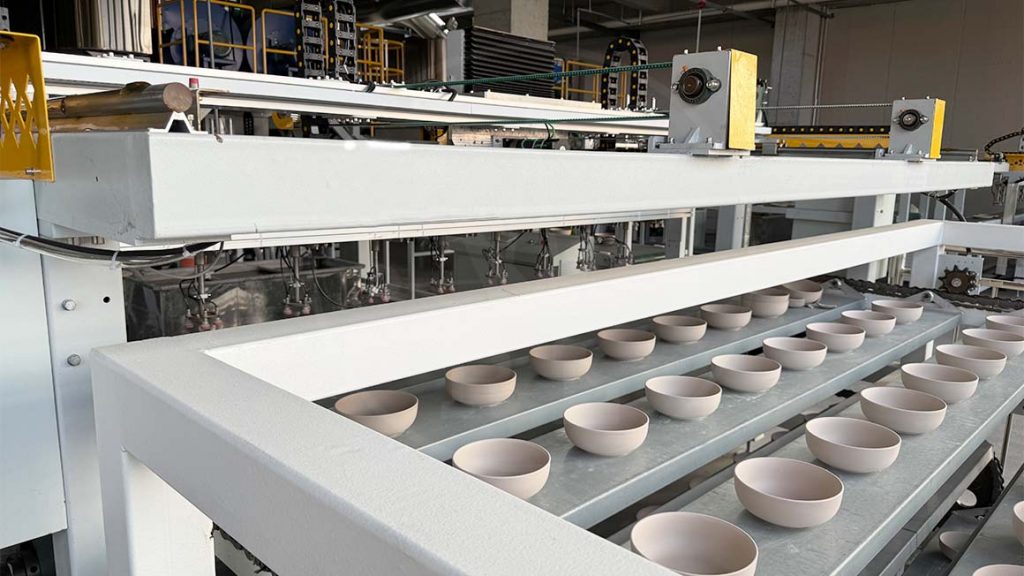
Automatic production and trimming equipment help reduce unnecessary dimensional differences between products.
This is important for tableware sets in which plates, bowls, mugs and serving pieces must present a coordinated appearance.
Many international customers place repeat orders throughout the year.
A more controlled production process helps the factory reproduce confirmed shapes, sizes and finishes more consistently across multiple production batches.
This is particularly important for retailers, hospitality suppliers and private-label brands that need continuity between previous and future orders.
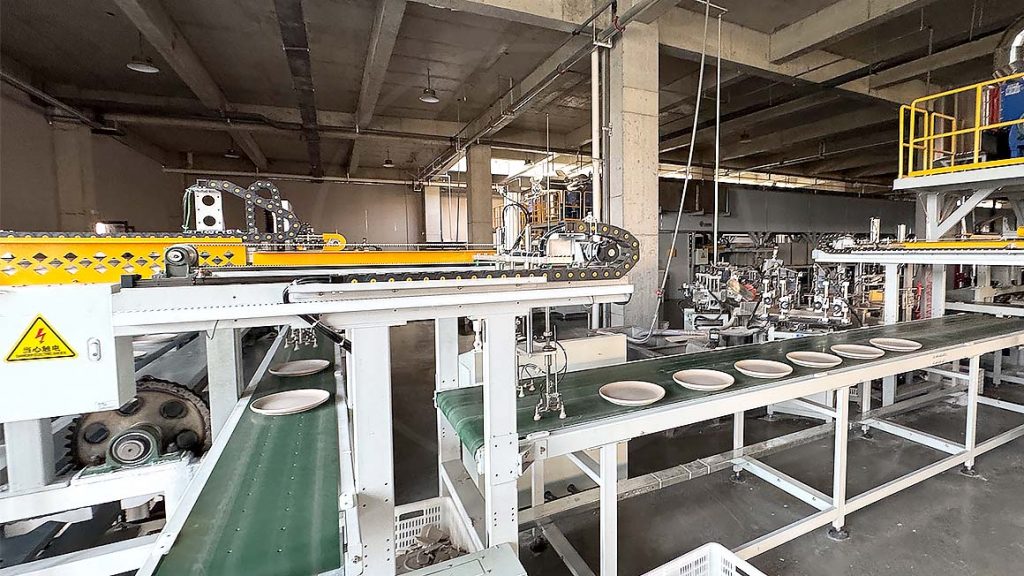
Automated equipment reduces the time required for repetitive production tasks and allows workers to focus more attention on process monitoring, quality inspection and product handling.
Improved efficiency also helps the factory coordinate larger orders and multiple product designs more effectively.
Large-capacity raw material preparation equipment and two long kilns provide a stronger production foundation for order scheduling.
Although every project depends on product complexity, order quantity, decoration and packaging requirements, modern equipment helps create a more organized and predictable production process.
Importers, supermarket chains and distributors often require substantial quantities with consistent specifications.
The new ceramic factory is structured to support larger order volumes while maintaining systematic production and quality inspection procedures.
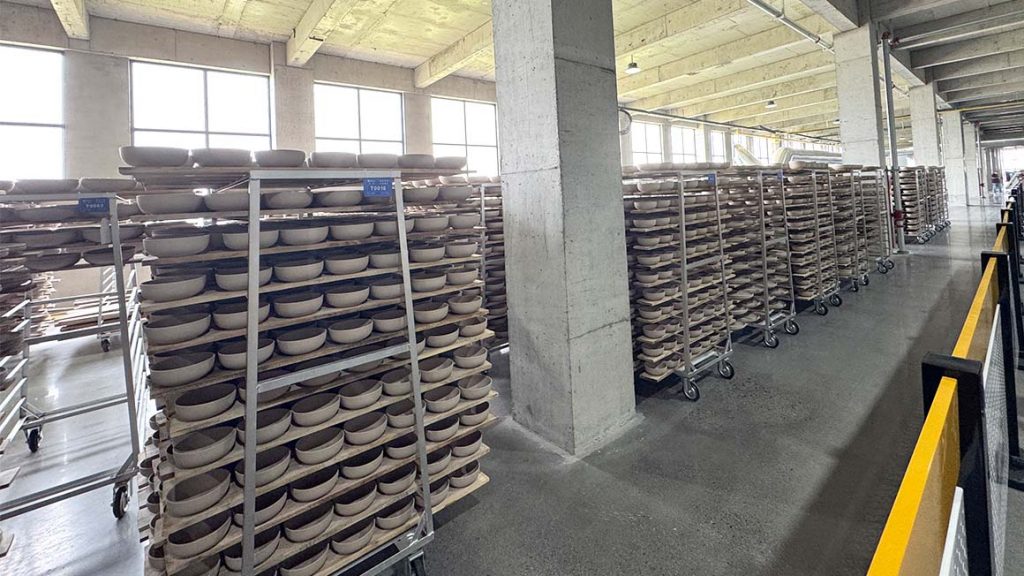
Modern equipment is only one part of reliable ceramic production.
Quality control must be implemented throughout the manufacturing process, from raw material preparation and body forming to glazing, firing, sorting and packaging.
Key inspection stages may include:
Ceramic products intended for food and beverage use may also require testing according to the destination market, product type and buyer’s requirements.
For example, overseas buyers may request testing related to metal release, dishwasher performance, microwave use or other product specifications. The U.S. Food and Drug Administration publishes information concerning ceramicware intended for preparing, serving or storing food and drink.
Testing requirements should always be confirmed according to the specific product, decoration, glaze, destination market and customer standard.
Raylon works closely with production and quality-control teams to follow order specifications and communicate production progress with customers.
The new facility also strengthens Raylon’s ability to support customized ceramic tableware projects.
International customers increasingly require products that reflect their own brand identity rather than standard products available to every buyer.
Through Raylon’s ceramic dinnerware customization services, customers can discuss different customization options, including:
The normal development process may include requirement communication, product selection, design confirmation, sampling, packaging development, production, inspection and shipment.
For projects involving new molds or special finishes, the Raylon team can communicate technical feasibility, sampling requirements and production considerations before mass production begins.
This combination of manufacturing resources and export-service experience enables Raylon to support both standard wholesale orders and customized OEM or ODM projects.
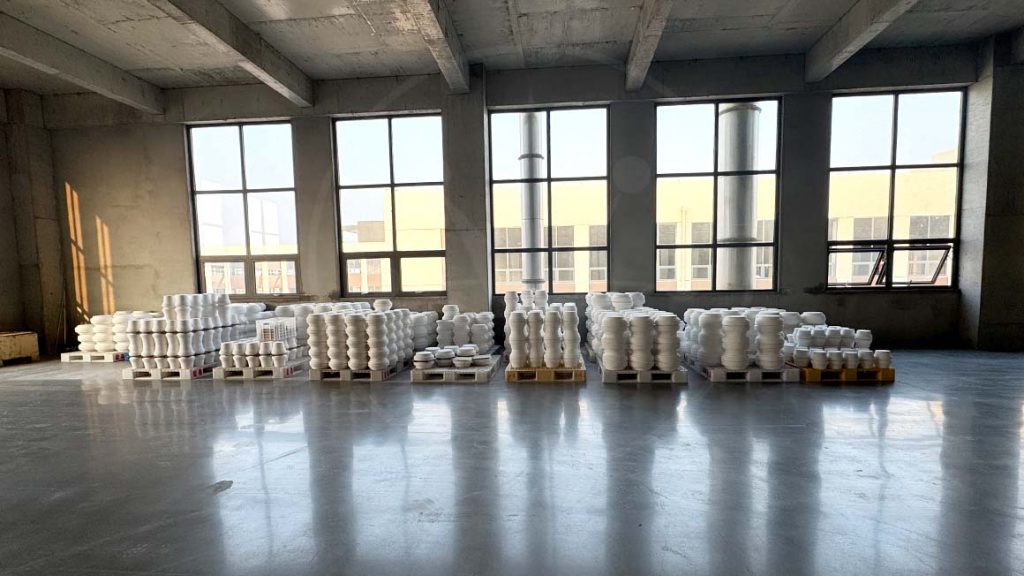
The new ceramic factory can provide production support for different categories of daily-use ceramic tableware.
These may include:
Buyers can explore Raylon’s current ceramic dinnerware collection to view different materials, shapes, glazes and product styles.
Different ceramic materials are suitable for different price ranges, markets and applications. Buyers who are still comparing materials can also read our guide to porcelain, stoneware and bone china dinnerware.
Our team can help customers compare material characteristics, target pricing, design requirements, packaging options and intended sales channels before confirming a project.
For international buyers, selecting a ceramic factory involves much more than comparing product prices.
A dependable ceramic supplier must also provide clear communication, product development support, quality follow-up, packaging coordination and export experience.
Raylon’s integrated manufacturing and trading model is designed to connect these different stages.
The new factory provides modern production resources, while Raylon’s export team supports:
This creates a more complete service system for importers, distributors, retail chains, hospitality suppliers and homeware brands.
Instead of communicating separately with multiple service providers, buyers can work with one team throughout the project.
The ignition of the new kilns represents more than the start of a new production cycle.
It marks a new chapter in Raylon’s ceramic manufacturing capabilities and reflects our continued investment in modern production, product consistency and global supply support.
With seven 40-ton ball mills, 11 automatic trimming units and two 92-meter kilns, the new ceramic factory provides a stronger foundation for ceramic dinnerware production and customized tableware development.
Looking ahead, Raylon will continue working with manufacturing teams, designers, quality inspectors and international customers to develop ceramic collections that combine practical performance, attractive design and reliable commercial value.
We sincerely thank everyone who contributed to the successful opening of the factory. We also look forward to welcoming more international partners to learn about our products, production capabilities and customization services.
Whether you are sourcing ceramic tableware in bulk, developing a private-label dinnerware collection or looking for a long-term OEM and ODM manufacturing partner, Raylon is ready to support your project.
Contact the Raylon team to request a product catalog, discuss your design requirements or learn more about our new ceramic factory.
The new facility is equipped with seven 40-ton ball mills, 11 automatic trimming units and two 92-meter kilns. These systems support raw material preparation, ceramic body finishing and continuous firing.
The facility can provide production support for ceramic dinnerware sets, plates, bowls, mugs, serving dishes, bakeware and other daily-use ceramic products. Final availability depends on the required material, shape, glaze, decoration and order specifications.
Yes. Raylon supports customization involving product shape, size, glaze color, decoration, logo, back stamp, packaging and dinnerware set combinations. New product development requirements are evaluated according to the design and manufacturing process.
Testing can be discussed according to the product type, glaze or decoration, destination market and buyer’s specifications. Customers should provide their required standards when requesting a quotation or developing a sample.
Buyers can send Raylon their target products, quantities, materials, designs, price range, packaging requirements and destination market. The Raylon team will then recommend suitable products or discuss sampling and customization options.