Porcelain, stoneware, and bone china are the mainstream body materials for ceramic dinnerware sets products. Their core differences lie in raw material formulations, firing temperatures, physical properties, and costs. They are suited for distinct application scenarios, target markets, and procurement requirements. When selecting these materials, overseas buyers should focus on five key dimensions: usage scenarios, transportation costs, consumer habits in target markets, price positioning, and certification requirements. Raylon will guide you through a comprehensive understanding of these material distinctions and how to better select products that align with your target market as a buyer.
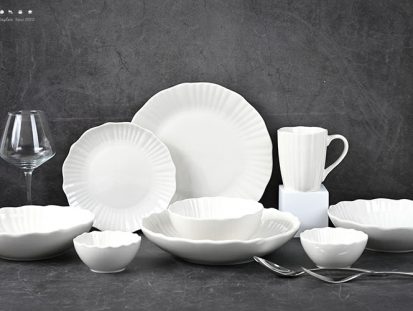
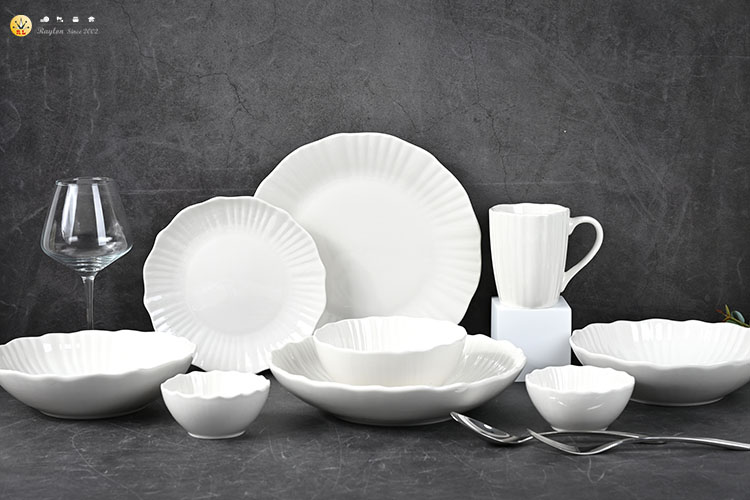
Made primarily from kaolin, quartz, and feldspar, and fired at approximately 1300℃, white porcelain tableware has advantages such as pure color, high-temperature resistance, and a water absorption rate of <0.5%. Suitable for formal occasions or everyday use, it offers excellent value. The cool white color and simple design of white porcelain also suit the requirements of high-end restaurants.
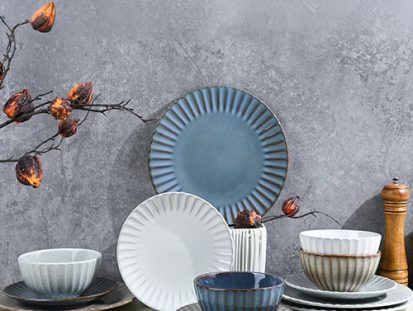
Primarily made from feldspar, quartz, and kaolin, stoneware tableware is fired at approximately 1200℃. It has a water absorption rate of <3% and poor translucency. However, it is characterized by low cost, high-temperature resistance, and excellent value, making it suitable for supermarket sales and frequent daily use.
Bone china cearmic dinnerware sets are high-end porcelain dining utensil made from animal bone ash, clay, feldspar, and quartz, fired twice—once at a high temperature and once at a low temperature with glaze. With a bone ash content of over 40% and a water absorption rate of <0.03%. Bone china tableware is characterized by its lightness, transparency, and good heat retention. It is generally suitable for high-end Chinese restaurants, Western restaurants, wedding events, business banquets, hotels, and other occasions, and is often used for Western food plating or afternoon tea.
| Material | Price Range | Durability | Maintenance Cost | Overall Cost-Effectiveness |
| White Porcelain | Low to Medium | High | Low (Easy to Clean) | ★★★★☆ |
| Stoneware | Low | Very High | Low (Easy to Clean) | ★★★★★ |
| Bone China | High | Low | Relatively High | ★★★☆☆ |
1. Stoneware: Lowest cost, suitable for bulk purchases with limited budgets (such as restaurant chains) as bulk stoneware tableware for restaurants.
2. Bone China: High price and high maintenance cost.
ⅠWhite Porcelain Dinner Set
Design Characteristics: Primarily pure white with diverse glaze decoration techniques, capable of presenting simple or intricate patterns.
Form Diversity: Highly malleable, enabling diverse shapes to suit both Chinese and Western dining needs.
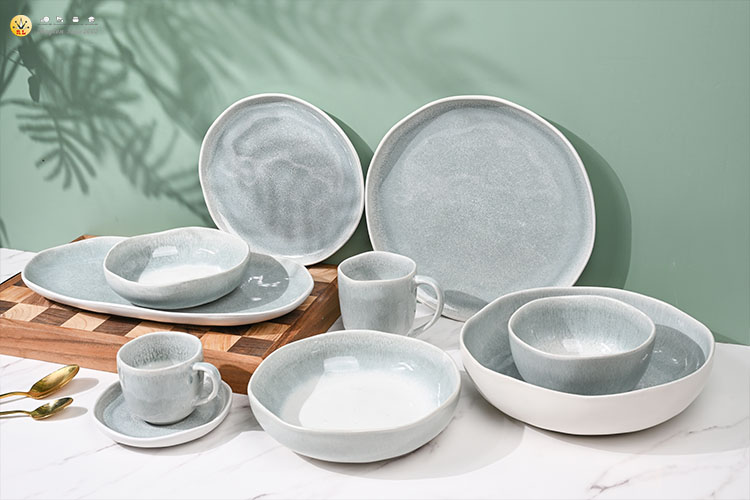
ⅡStoneware Dinnerware Sets
Design Features: Natural aesthetic, primarily featuring colored glazes and crystalline glazes. Rich in color but slightly less visually refined than porcelain.
Shape Diversity: Limited by production techniques, offering relatively simple forms with a focus on basic designs.
Ⅲ Bone China Ceramic Dinner Tableware
Design Features: Underglaze decoration yields vibrant colors and intricate patterns (e.g., floral, geometric motifs), often accented with gold trim or hand-painted elements.
Shape Diversity: Lightweight and thin, enabling complex forms (e.g., relief carvings, openwork), ideal for high-end presentation.
Raylon offers customization for various tableware needs, including: